Showing posts with label MFA in screenwriting. MFA in playwriting. Show all posts

Thursday, December 4, 2014

Subtext: A key to the script writer's art

One of the most significant elements in this difficult game of script writing is working with that elusive and dynamic "thing" called subtext--that submerged nine-tenths of the iceberg underneath those words on the page.  How do you use it to drive your dialogue and your characters' motivations and behavior and to fill those silences and pauses with potent energy and lightning-like insight and meaning?  Why is it that some writers are able to have the words that are actually spoken in a scene consistently take on a power far beyond what they are communicating on the surface? How do they do that?  What strings are they pulling to create that kind of special excitement between characters that pulls the audience ever further into the story that's unfolding?

The answer to these and similar questions involves backing up quite a bit when it comes to the process of creating a new script.  It demands that you know your characters inside and out before you attempt going into draft--what makes them tick, what specific milestone events have emotionally shaped their lives and how, and in what ways have they been involved with the main issue of the story that the future script is going to focus on--meaning knowing thoroughly their involvement with life in the past, before they first enter the action of your tale.

Subtext is that baggage--emotions, memories, and relationships--that every character is carrying with them as they enter your story.  And if your story is a good one, it will create its own ways that that baggage is felt and exploited as your characters face the dilemmas placed before them.  How they behave in certain moments of crisis or accusation, how they relate to other key individuals, how they respond to a sexual advance, and on and on....   And much of this behavior is nonverbal and very subtle.  A silence when a question is asked.  A hand going for that third drink when a certain topic is broached.  A shift in tone or volume in a character's speech.  These are well-crafted signals good writers constantly weave into their work and that point the audience to that subterranean place where the real story is continually percolating.

One of the masters at this is Harold Pinter.  His work is a study in the dynamic use of subtext.  Here's what he has to say about the famous silences in his plays:  "There are two silences.  One when no word is spoken.  The other perhaps when a torrent of language is being employed.  This speech is speaking of a language locked beneath it.  It is a necessary avoidance, a violent, sly, anguished or mocking smoke screen which keeps the other in it's place. When true silence falls we are still left with the echo, but are nearer nakedness.  One way of looking at speech is to say that it is a constant stratagem to cover nakedness."

That nine-tenths under the surface.

                                   *                    *                   *                   *


I'm the Program Director of the low-residency MFA in Writing for Stage and Screen being offered by the New Hampshire Institute of Art.  Our next residency runs January 3-11, 2015 and we are currently accepting applications for starting the program at the following residency that runs June 19-28, 2015.  I'm also a playwright and screenwriter, producing partner in my production company Either/Or Films (The Sensation of Sight and Only Daughter), and a professional script consultant.


Thursday, January 2, 2014

Our script writing residency about to begin...

Happy 2014 everyone!

My new year is off to a rousing start as the MFA program in Writing for Stage and Screen that I run launches into its ten-day winter residency this weekend in beautiful Peterborough, NH.  Student writers are traveling in from across the country and Canada in spite of a snow storm that has inconveniently decided to fly into New England at the same time.  We'll just have to adjust accordingly and use any "special" travel experiences as part of a writing exercise once we're all safely gathered around a roaring fire and sipping hot chocolate or perhaps some other beverage that warms the head and heart.  

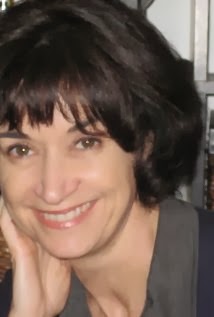
This residency promises to be especially exciting for all of us for several reasons besides our scheduled afternoon sleigh ride mid-week.  First, we're welcoming new faculty member and Visiting Artist Clare Sera to our growing roster of established faculty writers:


Clare, who hails from Los Angeles, co-wrote (among many other projects) the screenplay for the upcoming Adam Sandler/ Drew Barrymore film Blended due out in May. She'll be teaching classes to both our continuing students and those just starting the program.

Also joining us for the first time will be NYC playwright and screenwriter Karen Sunde (see her bio and others on the program's website), who will also be working closely with students for several days.  Karen's track record and experience in the theatre is extensive and her classes no doubt will be very lively.  Rounding out our faculty for this residency are returning playwrights Russell Davis and Kathleen Clarke as well as yours truly.

We'll also be doing readings of several screenplays written by students during the past semester, bringing in professional actors to spark the new work to life and test its viability.  The readings will be followed by lengthy discussion and feedback sessions. I'm especially looking forward to this aspect of the residency because the true test of any MFA program like ours is the output and quality of scripts that students deliver during their time with us.  I'm happy to say that, judging from the work turned in so far, we're well on our way to achieving our goal of having each student graduate at the end of their two years with at least four potent full-length scripts (either plays or screenplays or both) ready to make the professional rounds and hit the marketplace.

So as you work away on your current project, you'll know what'll be transpiring in the winter wonderland and picture perfect village of Peterborough, NH for the next couple of weeks.  Maybe we'll even discover that our sleigh ride experience will turn out to be the germ of several new plays or screenplays.  You never know where and how new ideas materialize...

                                            *                    *                   *                   *

I'm the Program Director of the low-residency MFA in Writing for Stage and Screen being offered by the New Hampshire Institute of Art and we are currently accepting applications for entering the program at our June 2014 summer residency.  I'm also a playwright and screenwriter, producing partner in my production company Either/Or Films (The Sensation of Sight and Only Daughter), and a professional script consultant.
Wednesday, September 11, 2013

Finding out more about our MFA in Writing for Stage and Screen

As I've mentioned in earlier posts, the New Hampshire Institute of Art is offering a new 2-year low-residence MFA in Writing for Stage and Screen run by yours truly.

Launched with great success this past June with a stellar faculty of established professional writers and students from NYC, Los Angeles, and Canada, this is a unique hands-on graduate program designed to guide a small number of talented student writers through an intensive process-oriented approach to the writing of plays and screenplays.  See my recent post below for a rundown on our first residency.

The next residency is this coming January 3-12 and we're actively seeking to add a small number of new student writers to our "family" when we reconvene as a group.  The application deadline for new students interested in joining us is the end of November.

Held in the historic and culturally alive New England village of Peterborough, New Hampshire, each of the five ten-day residences over the two-year program are designed as script laboratories utilizing a collected ensemble of theatre and film professionals to test and give voice to student work and offer intensive courses and workshops in various aspects of the craft and profession.

Between residencies students work on writing projects throughout each of the four semesters under the supervision of established writer/mentors drawn from the professional theatre and film worlds.

If you're in New England or happen to be in the area in the coming weeks, you can find out more at one of the following upcoming information/open house sessions:

Saturday, September 14th, 10-11:30 am--Sharon Arts Center Gallery, 30 Grove Street, Peterborough, NH

Tuesday, October 15th, 6-7:30 pm--Panopticon Gallery, Hotel Commonwealth, 502c Commonwealth Ave., Boston

Tuesday, October 22nd, 6-7:30 pm--Sharon Arts Center Gallery, 30 Grove Street, Peterborough, NH

Saturday, October 26th, 10-11:30 am--Amherst Street Gallery, 77 Amherst Street, Manchester, NH

To register for one of these info sessions:

Email:  gradadmissions@nhia.edu
or
Call:  603-836-2522